Why AI-Driven Leadership Matters: Benefits, Challenges, and Best Practices for 2026


By 2026, just experience and gut feeling don’t define leadership anymore. Now, knowing AI is crucial too. Smart machines shape big choices and plans in offices everywhere. To lead, you need to get how AI fits into daily work and helps make value for customers.
Think about a business leader looking at customer feedback. In the past, it took days and mostly used limited info. Now, AI can instantly analyze thousands of interactions and point out patterns too. So, leaders who get this change can move fast and be confident. Those who don’t might have trouble catching up.
AI for leaders isn’t about becoming tech whizzes; rather, it’s about understanding how to use AI to steer teams, make better choices, and boost innovation. With the rapid changes in the business world, more pros are joining AI leadership courses to keep up. This article dives into why AI-driven leadership matters, breaking down its key benefits, challenges, and best practices.
Benefits of AI Driven Leadership
Smarter and Faster Decision Making
AI helps leaders get real-time insights to make quick, informed choices. They don’t just use their past experience; leaders also blend human judgment with data-driven suggestions.
For example, a marketing manager could use AI to analyze how a campaign is doing, instantly tweaking strategies on the same day instead of waiting around for reports.
Enhanced Customer Experience
AI helps businesses grasp customer preferences deeply and personally.
Online platforms suggest products or content based on what you’ve done before, right? This shows how it can guide teams to make more meaningful customer interactions too, so leaders who get this can help their teams shine.
Improved Operational Efficiency
AI helps by automating boring tasks, letting teams concentrate on more creative and important stuff instead. In customer support, AI can deal with simple questions, which lets staff focus on the tougher issues needing empathy and creative problem-solving.
Encouraging Innovation
AI lets us explore fresh ideas and business plans. Organizations can test stuff quicker and roll out new solutions sooner.
With AI, product teams spot trends and create stuff that customers actually want. For example, they design better products by understanding what users prefer.
Building Data Driven Cultures
Leaders who use AI help create a data-driven decision culture, not one based on guesses. This builds team trust and bumps up performance.
Seeing choices supported by solid data makes employees more confident and in line with the company’s goals, so everyone performs better.
Challenges of AI Driven Leadership
Lack of Understanding and Skills
Many leaders don’t understand how AI works or how to use it well. This leads to hesitating or leaning too much on their tech teams. So, the company can’t get all the benefits AI offers.
Resistance to Change
Change with new tech is uncomfortable, making employees uneasy about AI’s role in the workplace. For instance, teams could reject AI tools due to fears of job loss or simple lack of confidence in handling the new stuff.
Ethical and Governance Concerns
AI raises key issues about data privacy, bias, and responsible use. Leaders must make sure these systems are fair and transparent too.
If not handled correctly, though, these challenges could damage an org’s reputation and customer trust.
Integration with Existing Processes
Introducing AI tools isn’t enough; orgs also need to revamp their workflows for full integration.
Just take an old system that you slap some AI onto without touching the process – chances are, the impact will be minimal.
Over Dependence on Technology
AI definitely gives us helpful info, but leaders shouldn’t trust it too much. Human judgment, creativity, and empathy are still super important for making decisions.
When leaders use data along with their people skills, they’re more likely to succeed.
Best Practices for AI Driven Leadership
Develop AI Awareness Across Teams
Leaders ought to concentrate on boosting basic AI understanding in their teams. It doesn’t require deep technical know-how; instead, it builds confidence in using AI tools. Organizations that invest in learning often opt for options like AI leadership course to develop such skills, too.
Align AI with Business Strategy
AI efforts need to align with a company’s big picture goals. Execs should make sure AI tackles actual business issues, not just jump on trends.
For instance, boosting customer loyalty through AI really matters more than random tests without a clear goal in sight.
Promote Collaboration Between Humans and AI
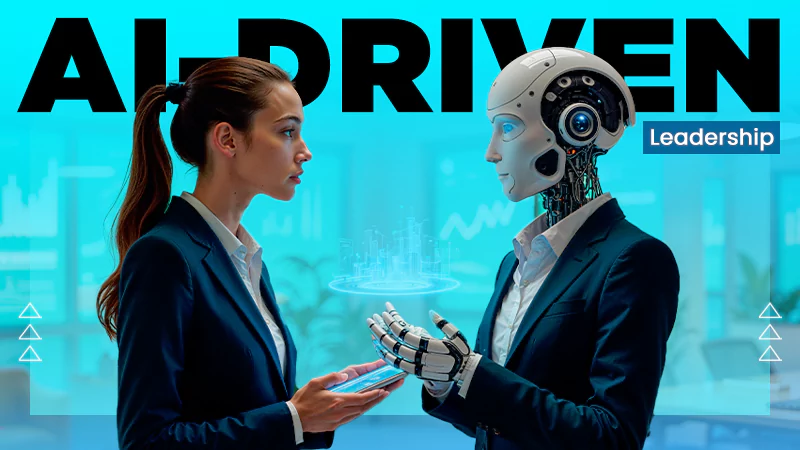
The best leadership blends human understanding with AI abilities. Leaders need to show teams that AI is a helpful buddy, not a competitor.
This looks like using AI for support while we make calls, letting staff add creativity and context instead.
Focus on Ethical AI Practices
Leaders must establish clear guidelines to ensure responsible use of AI. Transparency and accountability are essential in building trust within the organization and with customers.
For instance, explaining how AI based decisions are made can increase acceptance among teams and stakeholders.
Encourage Continuous Learning and Adaptability
AI keeps getting better, so leaders need to stay open and adaptable. When they stay curious and encourage experiments, it fosters a creative atmosphere. This approach is key for leaders using AI in business nowadays.
Conclusion
AI-led leadership isn’t some future idea; it’s already changing how businesses run, compete, and expand in 2026. Understanding AI helps leaders make better choices, boost customer satisfaction, and spark genuine innovation.
At the same time, issues like skill gaps, resisting change, and ethics worries need leaders who think carefully. The main point is, it’s not just about adopting AI; it’s using it clearly, with purpose and balance.
By concentrating on things like continuous learning, strategic alignment, and ethical governance, leaders can tap into AI’s full power. Gaining this stuff through hands-on experience or AI leadership courses is really key now.
In the end, AI for leaders is about mixing tech with human insights. People who get on board with this blend won’t just stay current—they’ll guide their orgs confidently forward.
Related Post