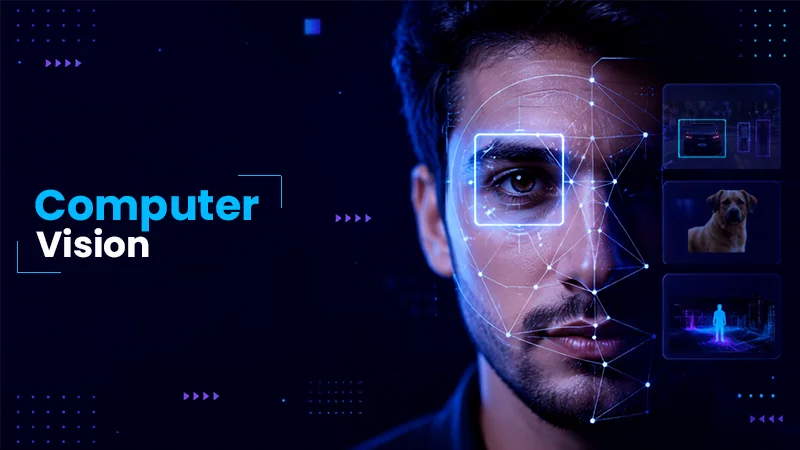
computer vision is a subpart of artificial intelligence as it uses various images and allows machines to process outcomes and insights based on their analytical abilities.
What is Computer Vision and How it Works?
June 27, 2026

There might be instances in your life where you go through X-ray machines or park your car while seeing sensor-oriented displays; well, these are some common examples of computer vision technology that we encounter often.
But this concept is not limited to only these spaces; in fact, it plays a componential role in many other domains also. This blog by GetAnswerss uncovers how it works and why it is beneficial for the world around us.
What is Computer Vision?
Computer vision is a domain of Generative AI that enables computing systems to process, analyze, and interpret visual data such as images and videos. It uses machine learning algorithms to create raw image data into insightful information and allows different mechanisms to utilize it for various purposes.
The most prominent factor of computer vision is image recognition as it decodes every aspect of the present input thoroughly and gathers data from various online entities to provide both conclusive and inclusive findings.
Read more: Robotic Process Automation: How RPA Works, Tools and Benefits
How Computer Vision Works?
Computer Vision works on a tri-engine methodology that includes procedures like:
- Image Acquisitions: In this phase, images are being collected in the database and sent for analytical assessment done by various AI models and hardware accessibility. Also statics images or videos get broken down into different pieces or crafted into 3D models or listicle data.
- Processing: Next, the obtained data is processed further for the extraction of information to provide different numerical insights, such as the shapes, edges, and all the geometrical patterns are observed.
- Classification: Lastly, after all this evaluation, the outcome is presented to the recipient with all the necessary details about the calibration of the input. While this seems like a very lengthy process, it gets done in real-time due to today’s fast computing chips.
Why is Computer Vision Beneficial?

Computer vision technology is being rapidly used by all the critical domains of the planet, and its utilities are being constantly developed by all the IT infrastructure as they are capable of minimizing human responsibilities and speeding up crucial operations like:
- Multiple Image Processing: It can process, analyze, and implement results by studying thousands of images using image recognition AI capabilities in a few minutes, which is impossible for any human team to pull off, even in hours.
- Better Security in Hardware Systems: Computer vision drastically improves the security standards of tech utilities like parking sensors, dashcams, surgical monitors, face recognition sensors etc by identifying and inputting patterns which cannot be observed with the naked eye. They also provide rapid alerts and precise solutions in critical situations.
- Automation in Medicine Tasks: There are so many things in any organization that are very time-consuming, like inventory assessment, stock marking, preservation etc which require a lot of people to get the work done. On the other hand, computer vision technologies are simply faster and better, using advanced scanning systems, data entry, and assessing damage in products by visualizing even minor details.
- Holistic Diagnosis: Most impactful usage of computers has been done by healthcare so far, as they utilise this technology for proactive diagnosis, patient recovery, and many more digital tests to deal with critical diseases. They also allow for easy patient description using their medical examination reports, saving a lot of time for medical staff and practicing professionals.
Where is Computer Vision Used?
Many people are unaware, but computer vision is the most vital part of so many domains around the globe, and empowered their digital transformation seamlessly. Some of the popular mentions of its alumni are mentioned below:
| Sector | Usage |
| Healthcare | In this sector, computer vision plays a vital role in diagnostics, patient prognosis, maintaining records, and scanning critical organs for better exposure of the physiological and psychological conditions of patients. |
| Transportation | Transportation has now been filled with computer vision technology as many vehicles are now equipped with appliances like automated parking sensors, cruise control, heatmaps, and climate control utilities, which are empowered with it, |
| Manufacturing | There was a time when picking out minor but lethal damages was impossible in mass production units until this invention came into play, as it made operators aware of them through detailed zoom and rapid alerts, even on minute conditions. |
| Sports | Computer vision technology has become an inseparable unit for the sports industry because it is used for assessment for many close calls and penalty declarations to maintain the fairness of matches intact. DRS in cricket and Goal-Line Technology (GLT) in soccer are some of its best examples. |
| Security | You often face recognition to open your devices or verify your identity on governmental portals. Well, this happens because of this invention, as it critically maps different facial patterns and stores them in an encrypted ecosystem. |
Read more: AI in Social Media: Uses, Tools, and Effects
What are the Challenges of Computer Vision?
Overall, this invention has given so many positives, while the challenges in implementation also frustrate many people and give them a sense of unreliability towards computer vision and AI image processing, such as:
- Technical failures: Sometimes when these systems are deployed and being constantly then there is potency where they can break down or start working ineffectively due to heavy load on servers or overheating in the hardware.
- Image Illusions: In sports matches, there are some instances or areas where lights are not properly projecting or shadows are being a bit too visible, then results of computer vision tools can become hallucinated due to lighting illusions.
- Lack of Proper Management: These technologies are very high-end and hard to maintain; thus, not having a good backend staff for machinery and software management can limit their true potential.
- Delay in Upgrades: Utilities of this field require regular upgrades like battery changes, sensor switches, lenses, and many more things, which can be both time-consuming and cost-constraining for organizations.
Conclusion
Computer Vision technology might go a bit unnoticed due to the constant evolution of AI engines like ChatGPT, but undoubtedly, it has created a drastic impact in many crucial segments that are essential for the sustainability of human life through its ability to fix and grasp minor details.
In fact, many industries like healthcare, sports, and security are revolutionized by it simply because new technological enhancements that have provided real-time details with maximum precision have improved their weak areas. Despite some triggering challenges, this domain is still very useful and going to empower many new-gen inventions too.
FAQs
Is computer vision AI or ML?
What are the 5 stages of computer vision?
The five stages of computer vision are image processing, feature extraction, image classification, object detection, and image segmentation.
Is computer vision a dead field?
Not at all; in fact, computer vision is a rapidly growing field in today’s IT infrastructure due to its AI capabilities for image and video analysis, processing, and centralization.
Latest Post
Related Post
How to Create Secure PDF Links Without Leaks
by Savan Sanghvi July 29, 2026
What is Computer Vision and How it Works?
by Leah Schwiesow June 27, 2026